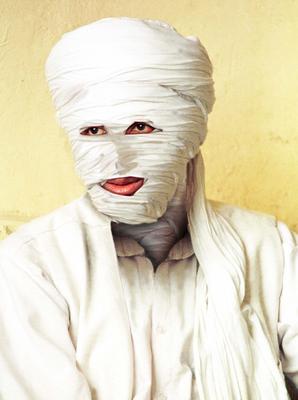
 Looks like a pre-goatse shot.....
just wait a few seconds and his hands will be tearing that in two.......
*shudder*
(*shudder*
 Lord Aerixis,
Sat 27 Oct 2007, 21:20,
archived)
*hides*
it looked normal when I drew it, now I keep seeing it as breasts :s or something else. photoshop-effect :s
( cat-biscuit is back,
Sat 27 Oct 2007, 21:22,
archived)
 my internests is bad at night
it'll disconnect soon as look at you
leading to reposting errors
(leading to reposting errors
 plentyofants more ghee, vicar?,
Sat 27 Oct 2007, 21:23,
archived)
it is like an untrained kitten
as soon as it goes dark
i think it must be interference from the streetlights or summat (as it varies as the daylight hours do)
(i think it must be interference from the streetlights or summat (as it varies as the daylight hours do)
plentyofants more ghee, vicar?,
Sat 27 Oct 2007, 21:27,
archived)
maybe it's just a crappy connection or somethingor waters getting into the wiring
phone up bt and tell them off for having a crap phoneline
(phone up bt and tell them off for having a crap phoneline
 discomeats This canoe,
Sat 27 Oct 2007, 21:35,
archived)
Joss Ackland's Spunky Backpack
or Hattie Jacques Pretentious Cheese Wog
I can't decide
(I can't decide
 Tofor,
Sat 27 Oct 2007, 22:47,
archived)


 Well
it scared the bejeebus out of me too, woo :¬)
( wibblywobbly - helping ugly people get laid since 1982,
Sat 27 Oct 2007, 21:16,
archived)
Hahaha!
G'devening all!


( Sir Aunty Grampa Dave the Hat - enjoying a post-meridian muncheon - Ta! Cannaoogim!?,
Sat 27 Oct 2007, 21:17,
archived)
Aye!
*tips cap*
( wibblywobbly - helping ugly people get laid since 1982,
Sat 27 Oct 2007, 21:25,
archived)
 death to ___________________ (fill in blank here)...

 atomic A-bomb-a-nation,
Sat 27 Oct 2007, 21:02,
archived)
isn't this standard practice for anything the church doesn't like discomeats This canoe,
Sat 27 Oct 2007, 21:17,
archived)
 hmm
you should google image for "gulf wars II clone of the attack"
:)
(:)
discomeats This canoe,
Sat 27 Oct 2007, 20:32,
archived)
nice.BTW. If I ignore any more people b3ta will have fuck all on it. Mind you, I won't have to read shit from childish idiots so it's all good.
( Pasanonic 's been known to cause insanity in laboratory mice,
Sat 27 Oct 2007, 21:00,
archived)
Fair enough!
On free server atm, apparintly 30 mins to level 40, 255 is highest level.
( Cae1,
Sat 27 Oct 2007, 21:01,
archived)
hehe.I tried a few of those but got tired of DC and disappearing items. Let me know when you are back on Blizz, I need a boost in ZF ;)
( Pasanonic 's been known to cause insanity in laboratory mice,
Sat 27 Oct 2007, 21:05,
archived)
*gasp*You're level 65?
( Killerkitti Like my coffee black, just like my metal,
Sat 27 Oct 2007, 21:35,
archived)
...
Goat
From Wikipedia, the free encyclopedia
(Redirected from Goats)
• Ten things you may not know about Wikipedia •
Jump to: navigation, search
This article is about the domestic species. For general information, including mythology and wild species, see Capra (genus).
For other uses, see Goat (disambiguation).
Domestic Goat
Conservation status
Domesticated
Scientific classification
Kingdom: Animalia
Phylum: Chordata
Class: Mammalia
Order: Artiodactyla
Family: Bovidae
Subfamily: Caprinae
Genus: Capra
Species: C. aegagrus
Subspecies: C. a. hircus
Trinomial name
Capra aegagrus hircus
(Linnaeus, 1758)
Male goat, also called a billy or buck
Male goat, also called a billy or buck
Baby goats, called kids. These two are actually siblings and come from two pure white parents
Baby goats, called kids. These two are actually siblings and come from two pure white parents
The domestic goat (Capra aegagrus hircus) is a domesticated subspecies of the wild goat of southwest Asia and Eastern Europe. The goat is a member of the Bovidae family and is closely related to the sheep, both being in the goat antelope subfamily Caprinae.
Domestic goats are one of the oldest domesticated species. For thousands of years, goats have been used for their milk, meat, hair, and skins all over the world.[1] In the last century they have also gained some popularity as pets.[2]
Female goats are referred to as “does” or “nannies” (or, less frequently, as “mishas”), intact males as “bucks” or “billies”; their offspring are “kids”. Castrated males are “wethers”. Goat meat is sometimes called “chevon”.
Contents
[hide]
* 1 Etymology
* 2 History
* 3 Reproduction
* 4 Feeding goats
* 5 Goat uses
o 5.1 Meat
o 5.2 Milk, butter and cheese
o 5.3 Fiber
o 5.4 Skin
o 5.5 Beast of burden
o 5.6 Brush control
* 6 Goat breeds
o 6.1 Feral
o 6.2 Dairy
o 6.3 Fiber
o 6.4 Meat
o 6.5 Companion
o 6.6 Skin
o 6.7 Wild
* 7 Showing
* 8 Anatomy
* 9 Bible
* 10 Popular culture
* 11 Gallery
* 12 References
* 13 See also
* 14 External links
Etymology
The Modern English word “goat” comes from the Old English “gat” which meant she-goat which itself derived from Proto-Germanic “*gaitaz” (compare Old Norse and Dutch “geit”, German “Geiß” and Gothic “gaits” all meaning goat) ultimately from Proto-Indo-European “*ghaidos” meaning young goat but also play (compare Latin “hædus” meaning kid). The word for male goat in Old English was “bucca” (which survives as “buck”, meaning certain male herbivores) until a shift to he-goat/she-goat occurred in the late 12th century. “Nanny goat” originated in the 18th century and “billy goat” in the 19th.
The word “chevon” is derived from the Norman French “chevre” (goat).
History
Goats seem to have been first domesticated roughly 10,000 years ago in the Zagros Mountains of Iran.[3] Ancient cultures and tribes began to keep them for easy access to milk, hair, meat, and skins. Domestic goats were generally kept in herds that wandered on hills or other grazing areas, often tended by goatherds who were frequently children or adolescents, similar to the more widely known shepherd. These methods of herding are still used today.
Historically, goat hide has been used for water and wine bottles in both traveling and transporting wine for sale. It has also been used to produce parchment, which was the most common material used for writing in Europe until the invention of the printing press.
Reproduction
In some climates, goats, like humans, are able to breed at any time of the year. In northern climates and among the Swiss breeds, the breeding season commences as the day length shortens, and ends in early spring. Does of any breed come into heat every 21 days for 2 to 48 hours. A doe in heat typically flags her tail often, stays near the buck if one is present, becomes more vocal, and may also show a decrease in appetite and milk production for the duration of the heat.
Bucks (intact males) of Swiss and northern breeds come into rut in the fall as with the doe's heat cycles. Rut is characterized by a decrease in appetite, obsessive interest in the does, a strong heat.
Mother goat eating placenta
Mother goat eating placenta
In addition to live breeding, artificial insemination has gained popularity among goat breeders, as it allows for rapid improvement because of breeder access to a wide variety of bloodlines.
Gestation length is approximately 150 days. Twins are the usual result, with single and triplet births also common. Less frequent are litters of quadruplet, quintuplet, and even sextuplet kids. Birthing, known as kidding, generally occurs uneventfully with few complications. The mother often eats the placenta, which, with its oxytocin, gives her much needed nutrients, helps staunch her bleeding, and is believed by some[attribution needed] to reduce the lure of the birth scent to predators.
Freshening (coming into milk production) occurs at kidding. Milk production varies with the breed, age, quality, and diet of the doe; dairy goats generally produce between 660 to 1,800 L (1,500 and 4,000 lb) of milk per 305 day lactation. On average, a good quality dairy doe will give at least 6 lb (2.7 L) of milk per day while she is in milk, although a first time milker may produce less, or as much as 16 lb (7.3 L) or more of milk in exceptional cases. Meat, fiber, and pet breeds are not usually milked and simply produce enough for the kids until weaning.
Feeding goats
Goats are reputed to be willing to eat almost anything. The digestive systems of a goat allow nearly any organic substance to be broken down and used as nutrients.
A goat feeding on weeds.
A goat feeding on weeds.
Contrary to this reputation, they are quite fastidious in their habits, preferring to browse on the tips of woody shrubs and trees, as well as the occasional broad leaved plant. It can fairly be said that goats will eat almost anything in the botanical world. Their plant diet is extremely varied and includes some species which are toxic or detrimental to cattle and sheep. This makes them valuable for controlling noxious weeds and clearing brush and undergrowth. They will seldom eat soiled food or water unless facing starvation. This is one of the reasons why goat rearing is most often free ranging since stall-fed goat rearing involves extensive upkeep and is seldom commercially viable.
Goats do not actually consume garbage, tin cans, or clothing, although they will occasionally eat items made primarily of plant material, which can include wood. Their reputation for doing so is most likely due to their intensely inquisitive and intelligent nature: they will explore anything new or unfamiliar in their surroundings. They do so primarily with their prehensile upper lip and tongue. This is why they investigate clothes and sometimes washing powder boxes by nibbling at them.
The digestive physiology of a very young kid is essentially the same as that of a monogastric animal. Milk digestion begins in the abomasum, the milk having bypassed the rumen via closure of the reticular/esophageal groove during suckling. At birth the rumen is undeveloped, and as the kid begins to consume solid feed, the rumen increases in size and in its capacity to absorb nutrients.
Goats will consume, on average, 4.5 pounds of dry matter per 100 lb of body weight per day.[citation needed]
Goat uses
A goat is useful both alive and dead, first as a renewable provider of milk and fibre, and then as meat and hide. Some charities provide goats to impoverished people in poor countries, because goats are easier to manage than cattle and have multiple uses.
Meat
The taste of goat meat is similar to that of lamb meat; in fact, in some parts of Asia, particularly India, the word "mutton" is used to describe both goat and lamb meat. However, some feel that it has a similar taste to veal or venison, depending on the age and condition of the goat. It can be prepared in a variety of ways including stewed, curried, baked, grilled, barbecued, minced, canned, or made into sausage. Goat jerky is also another popular variety. In India, the rice-preparation of mutton biryani uses goat meat as its primary ingredients to produce a rich taste.
Nutritionally, it is healthier than mutton as it is lower in fat and cholesterol, and comparable to chicken. It also has more minerals than chicken,[4] and is lower in total and saturated fats than other meats.[5] One reason for the leanness is that goats do not accumulate fat deposits or “marbling” in their muscles; chevon (goat meat) must ideally be cooked longer and at lower temperatures than other red meats.[6] It is popular in the Middle East, South Asia, Africa, northeastern Brazil, the West Indies, and Belize. Chevon, as yet, is not popular in most western nations, though it is among the fastest growing sectors of the livestock industry in the US. [citation needed]
Other parts of the goat including organs are also equally edible. Special delicacies include the brain and liver. The head and legs of the goat are smoked and used to prepare unique spicy dishes and soup.
One of the most popular goats grown for meat is the South African Boer, introduced into the United States in the early 1990s. The New Zealand Kiko is also considered a meat breed, as is the Myotonic or “fainting goat”, a breed originally identified in Tennessee.
Milk, butter and cheese
Goats in milking stalls
Goats in milking stalls
Some goats are bred for milk which can be drunk fresh, although pasteurization is recommended to reduce naturally occurring S. aureus and E. coli.[7] Goat milk is commonly processed into cheese, and small commercial operations offer goat butter and ice cream. If the strong-smelling buck is not separated from the does, his scent will affect the milk.
Goats' milk contains less lactose, so is less likely to trigger lactose intolerance. The milk is naturally homogenized since it lacks the protein agglutinin. The curd is much smaller. The milk also has a more similar makeup (percentage of fats, etc.) to human milk than cows milk[citation needed]. For these reasons, goats' milk may be recommended for infants and people who have difficulty digesting cows' milk[citation needed]. On the other hand the UK Department of Health say that, "infant milks based on goats' milk protein are not suitable as a source of nutrition for infants (under 1 year of age)." They also state that, "Formula derived from goats' milk is also unsuitable for babies who are lactose intolerant as it contains similar levels of lactose to cows' milk based infant formulae."[8]
Goats' butter is white (compared to cows' yellow butter) because the goats produce milk with beta-carotene converted to a form of vitamin A.
Goat cheese is known as “chèvre” in France, after the French word for goat. Some varieties include Rocamadour and Montrachet.[9] Feta is a well-known Greek variety that may be made with a blend of goat's and sheep's milk.
Fiber
An Angora goat being sheared
An Angora goat being sheared
Some goats are bred for the fiber from their coats. Most goats have softer insulating hairs nearer the skin, and longer guard hairs on the surface. The desirable fiber for the textile industry is the former, and it goes by several names (mohair, fleece, goat wool, cashmere, etc., explained below). The coarse guard hairs are worthless as they cannot be spun or dyed. The proportion and texture varies between breeds, and has been a target of selective breeding for millennia.
The Cashmere goat produces a fiber, cashmere wool, which is one of the best in the world. It is very fine and soft. Most goats produce cashmere fiber to some degree, however the Cashmere goat has been specially bred to produce a much higher amount of it with fewer guard hairs.
The Angora breed produces long, curling, lustrous locks of mohair. The entire body of the goat is covered with mohair and there are no guard hairs. The locks constantly grow and can be four inches or more in length.
Goats do not have to be slaughtered to harvest the wool, which is instead sheared (cut from the body) in the case of Angora goats, or combed, in the case of Cashmere goats. However, the Angora goat usually gets shorn twice a year with an average yield of about 10 pounds while the Cashmere goat grows its fiber once a year and it takes about a week to comb out by hand, yielding only about 4 ounces.
The fiber is made into products such as sweaters and doll's hair. Both cashmere and mohair are warmer per ounce than wool and are not scratchy or itchy or as allergenic as wool sometimes is. Both fibers command a higher price than wool, compensating for the fact that there is less fiber per goat than there would be wool per sheep.
In South Asia, cashmere is called “pashmina” (from Persian “pashmina”, fine wool) and these goats are called “pashmina” goats (often mistaken for sheep). Since these goats actually belong to the upper Kashmir and Laddakh region, their wool came to be known as cashmere in the West. The pashmina shawls of Kashmir with their intricate embroidery are very famous.
Skin
Goat skin is still used today to make gloves, boots, and other products that require a soft hide. Kid gloves, popular in Victorian times, are still made today. The Black Bengal breed, native to Bangladesh, provides high-quality skin. The skin also used in Indonesia as rugs and native instrumental drum skin named bedug.
Other parts of the goat are also equally useful. For instance, the intestine is used to make catgut, which is still in use as a material for internal human sutures. The horn of the goat, which signifies wellbeing (Cornucopia) is also used to make spoons etc.[10]
Beast of burden
Rarely, goats will be used as light pack animals (in a similar manner to Llamas) or even to draw carts. Usually goats used for such purposes will be wethers.
Brush control
Many farmers use inexpensive (i.e. not purebred) goats for brush control, leading to the use of the term “brush goats”. (Brush goats are not a breed of goat, but rather a functional category.) Because they prefer weeds (e.g. multiflora rose, thorns, small trees) to clover and grass, they are often used to keep fields clear for other animals.
Goats are also being used in urban areas to control weeds and undergrowth in fire prone areas.[11]
[See the article on Ches McCartney.]
(,
Sat 27 Oct 2007, 20:33,
archived)
From Wikipedia, the free encyclopedia
(Redirected from Goats)
• Ten things you may not know about Wikipedia •
Jump to: navigation, search
This article is about the domestic species. For general information, including mythology and wild species, see Capra (genus).
For other uses, see Goat (disambiguation).
Domestic Goat
Conservation status
Domesticated
Scientific classification
Kingdom: Animalia
Phylum: Chordata
Class: Mammalia
Order: Artiodactyla
Family: Bovidae
Subfamily: Caprinae
Genus: Capra
Species: C. aegagrus
Subspecies: C. a. hircus
Trinomial name
Capra aegagrus hircus
(Linnaeus, 1758)
Male goat, also called a billy or buck
Male goat, also called a billy or buck
Baby goats, called kids. These two are actually siblings and come from two pure white parents
Baby goats, called kids. These two are actually siblings and come from two pure white parents
The domestic goat (Capra aegagrus hircus) is a domesticated subspecies of the wild goat of southwest Asia and Eastern Europe. The goat is a member of the Bovidae family and is closely related to the sheep, both being in the goat antelope subfamily Caprinae.
Domestic goats are one of the oldest domesticated species. For thousands of years, goats have been used for their milk, meat, hair, and skins all over the world.[1] In the last century they have also gained some popularity as pets.[2]
Female goats are referred to as “does” or “nannies” (or, less frequently, as “mishas”), intact males as “bucks” or “billies”; their offspring are “kids”. Castrated males are “wethers”. Goat meat is sometimes called “chevon”.
Contents
[hide]
* 1 Etymology
* 2 History
* 3 Reproduction
* 4 Feeding goats
* 5 Goat uses
o 5.1 Meat
o 5.2 Milk, butter and cheese
o 5.3 Fiber
o 5.4 Skin
o 5.5 Beast of burden
o 5.6 Brush control
* 6 Goat breeds
o 6.1 Feral
o 6.2 Dairy
o 6.3 Fiber
o 6.4 Meat
o 6.5 Companion
o 6.6 Skin
o 6.7 Wild
* 7 Showing
* 8 Anatomy
* 9 Bible
* 10 Popular culture
* 11 Gallery
* 12 References
* 13 See also
* 14 External links
Etymology
The Modern English word “goat” comes from the Old English “gat” which meant she-goat which itself derived from Proto-Germanic “*gaitaz” (compare Old Norse and Dutch “geit”, German “Geiß” and Gothic “gaits” all meaning goat) ultimately from Proto-Indo-European “*ghaidos” meaning young goat but also play (compare Latin “hædus” meaning kid). The word for male goat in Old English was “bucca” (which survives as “buck”, meaning certain male herbivores) until a shift to he-goat/she-goat occurred in the late 12th century. “Nanny goat” originated in the 18th century and “billy goat” in the 19th.
The word “chevon” is derived from the Norman French “chevre” (goat).
History
Goats seem to have been first domesticated roughly 10,000 years ago in the Zagros Mountains of Iran.[3] Ancient cultures and tribes began to keep them for easy access to milk, hair, meat, and skins. Domestic goats were generally kept in herds that wandered on hills or other grazing areas, often tended by goatherds who were frequently children or adolescents, similar to the more widely known shepherd. These methods of herding are still used today.
Historically, goat hide has been used for water and wine bottles in both traveling and transporting wine for sale. It has also been used to produce parchment, which was the most common material used for writing in Europe until the invention of the printing press.
Reproduction
In some climates, goats, like humans, are able to breed at any time of the year. In northern climates and among the Swiss breeds, the breeding season commences as the day length shortens, and ends in early spring. Does of any breed come into heat every 21 days for 2 to 48 hours. A doe in heat typically flags her tail often, stays near the buck if one is present, becomes more vocal, and may also show a decrease in appetite and milk production for the duration of the heat.
Bucks (intact males) of Swiss and northern breeds come into rut in the fall as with the doe's heat cycles. Rut is characterized by a decrease in appetite, obsessive interest in the does, a strong heat.
Mother goat eating placenta
Mother goat eating placenta
In addition to live breeding, artificial insemination has gained popularity among goat breeders, as it allows for rapid improvement because of breeder access to a wide variety of bloodlines.
Gestation length is approximately 150 days. Twins are the usual result, with single and triplet births also common. Less frequent are litters of quadruplet, quintuplet, and even sextuplet kids. Birthing, known as kidding, generally occurs uneventfully with few complications. The mother often eats the placenta, which, with its oxytocin, gives her much needed nutrients, helps staunch her bleeding, and is believed by some[attribution needed] to reduce the lure of the birth scent to predators.
Freshening (coming into milk production) occurs at kidding. Milk production varies with the breed, age, quality, and diet of the doe; dairy goats generally produce between 660 to 1,800 L (1,500 and 4,000 lb) of milk per 305 day lactation. On average, a good quality dairy doe will give at least 6 lb (2.7 L) of milk per day while she is in milk, although a first time milker may produce less, or as much as 16 lb (7.3 L) or more of milk in exceptional cases. Meat, fiber, and pet breeds are not usually milked and simply produce enough for the kids until weaning.
Feeding goats
Goats are reputed to be willing to eat almost anything. The digestive systems of a goat allow nearly any organic substance to be broken down and used as nutrients.
A goat feeding on weeds.
A goat feeding on weeds.
Contrary to this reputation, they are quite fastidious in their habits, preferring to browse on the tips of woody shrubs and trees, as well as the occasional broad leaved plant. It can fairly be said that goats will eat almost anything in the botanical world. Their plant diet is extremely varied and includes some species which are toxic or detrimental to cattle and sheep. This makes them valuable for controlling noxious weeds and clearing brush and undergrowth. They will seldom eat soiled food or water unless facing starvation. This is one of the reasons why goat rearing is most often free ranging since stall-fed goat rearing involves extensive upkeep and is seldom commercially viable.
Goats do not actually consume garbage, tin cans, or clothing, although they will occasionally eat items made primarily of plant material, which can include wood. Their reputation for doing so is most likely due to their intensely inquisitive and intelligent nature: they will explore anything new or unfamiliar in their surroundings. They do so primarily with their prehensile upper lip and tongue. This is why they investigate clothes and sometimes washing powder boxes by nibbling at them.
The digestive physiology of a very young kid is essentially the same as that of a monogastric animal. Milk digestion begins in the abomasum, the milk having bypassed the rumen via closure of the reticular/esophageal groove during suckling. At birth the rumen is undeveloped, and as the kid begins to consume solid feed, the rumen increases in size and in its capacity to absorb nutrients.
Goats will consume, on average, 4.5 pounds of dry matter per 100 lb of body weight per day.[citation needed]
Goat uses
A goat is useful both alive and dead, first as a renewable provider of milk and fibre, and then as meat and hide. Some charities provide goats to impoverished people in poor countries, because goats are easier to manage than cattle and have multiple uses.
Meat
The taste of goat meat is similar to that of lamb meat; in fact, in some parts of Asia, particularly India, the word "mutton" is used to describe both goat and lamb meat. However, some feel that it has a similar taste to veal or venison, depending on the age and condition of the goat. It can be prepared in a variety of ways including stewed, curried, baked, grilled, barbecued, minced, canned, or made into sausage. Goat jerky is also another popular variety. In India, the rice-preparation of mutton biryani uses goat meat as its primary ingredients to produce a rich taste.
Nutritionally, it is healthier than mutton as it is lower in fat and cholesterol, and comparable to chicken. It also has more minerals than chicken,[4] and is lower in total and saturated fats than other meats.[5] One reason for the leanness is that goats do not accumulate fat deposits or “marbling” in their muscles; chevon (goat meat) must ideally be cooked longer and at lower temperatures than other red meats.[6] It is popular in the Middle East, South Asia, Africa, northeastern Brazil, the West Indies, and Belize. Chevon, as yet, is not popular in most western nations, though it is among the fastest growing sectors of the livestock industry in the US. [citation needed]
Other parts of the goat including organs are also equally edible. Special delicacies include the brain and liver. The head and legs of the goat are smoked and used to prepare unique spicy dishes and soup.
One of the most popular goats grown for meat is the South African Boer, introduced into the United States in the early 1990s. The New Zealand Kiko is also considered a meat breed, as is the Myotonic or “fainting goat”, a breed originally identified in Tennessee.
Milk, butter and cheese
Goats in milking stalls
Goats in milking stalls
Some goats are bred for milk which can be drunk fresh, although pasteurization is recommended to reduce naturally occurring S. aureus and E. coli.[7] Goat milk is commonly processed into cheese, and small commercial operations offer goat butter and ice cream. If the strong-smelling buck is not separated from the does, his scent will affect the milk.
Goats' milk contains less lactose, so is less likely to trigger lactose intolerance. The milk is naturally homogenized since it lacks the protein agglutinin. The curd is much smaller. The milk also has a more similar makeup (percentage of fats, etc.) to human milk than cows milk[citation needed]. For these reasons, goats' milk may be recommended for infants and people who have difficulty digesting cows' milk[citation needed]. On the other hand the UK Department of Health say that, "infant milks based on goats' milk protein are not suitable as a source of nutrition for infants (under 1 year of age)." They also state that, "Formula derived from goats' milk is also unsuitable for babies who are lactose intolerant as it contains similar levels of lactose to cows' milk based infant formulae."[8]
Goats' butter is white (compared to cows' yellow butter) because the goats produce milk with beta-carotene converted to a form of vitamin A.
Goat cheese is known as “chèvre” in France, after the French word for goat. Some varieties include Rocamadour and Montrachet.[9] Feta is a well-known Greek variety that may be made with a blend of goat's and sheep's milk.
Fiber
An Angora goat being sheared
An Angora goat being sheared
Some goats are bred for the fiber from their coats. Most goats have softer insulating hairs nearer the skin, and longer guard hairs on the surface. The desirable fiber for the textile industry is the former, and it goes by several names (mohair, fleece, goat wool, cashmere, etc., explained below). The coarse guard hairs are worthless as they cannot be spun or dyed. The proportion and texture varies between breeds, and has been a target of selective breeding for millennia.
The Cashmere goat produces a fiber, cashmere wool, which is one of the best in the world. It is very fine and soft. Most goats produce cashmere fiber to some degree, however the Cashmere goat has been specially bred to produce a much higher amount of it with fewer guard hairs.
The Angora breed produces long, curling, lustrous locks of mohair. The entire body of the goat is covered with mohair and there are no guard hairs. The locks constantly grow and can be four inches or more in length.
Goats do not have to be slaughtered to harvest the wool, which is instead sheared (cut from the body) in the case of Angora goats, or combed, in the case of Cashmere goats. However, the Angora goat usually gets shorn twice a year with an average yield of about 10 pounds while the Cashmere goat grows its fiber once a year and it takes about a week to comb out by hand, yielding only about 4 ounces.
The fiber is made into products such as sweaters and doll's hair. Both cashmere and mohair are warmer per ounce than wool and are not scratchy or itchy or as allergenic as wool sometimes is. Both fibers command a higher price than wool, compensating for the fact that there is less fiber per goat than there would be wool per sheep.
In South Asia, cashmere is called “pashmina” (from Persian “pashmina”, fine wool) and these goats are called “pashmina” goats (often mistaken for sheep). Since these goats actually belong to the upper Kashmir and Laddakh region, their wool came to be known as cashmere in the West. The pashmina shawls of Kashmir with their intricate embroidery are very famous.
Skin
Goat skin is still used today to make gloves, boots, and other products that require a soft hide. Kid gloves, popular in Victorian times, are still made today. The Black Bengal breed, native to Bangladesh, provides high-quality skin. The skin also used in Indonesia as rugs and native instrumental drum skin named bedug.
Other parts of the goat are also equally useful. For instance, the intestine is used to make catgut, which is still in use as a material for internal human sutures. The horn of the goat, which signifies wellbeing (Cornucopia) is also used to make spoons etc.[10]
Beast of burden
Rarely, goats will be used as light pack animals (in a similar manner to Llamas) or even to draw carts. Usually goats used for such purposes will be wethers.
Brush control
Many farmers use inexpensive (i.e. not purebred) goats for brush control, leading to the use of the term “brush goats”. (Brush goats are not a breed of goat, but rather a functional category.) Because they prefer weeds (e.g. multiflora rose, thorns, small trees) to clover and grass, they are often used to keep fields clear for other animals.
Goats are also being used in urban areas to control weeds and undergrowth in fire prone areas.[11]
[See the article on Ches McCartney.]
But aren't you interested in goats?What sick cunt isn't interested in goats?
(,
Sat 27 Oct 2007, 20:37,
archived)


 oooh
that's a bit good*
*or very
(*or very
 @><|= w0nu!) or cunt to my friends,
Sat 27 Oct 2007, 20:40,
archived)
Goats not your thing? Try
Vagina
From Wikipedia, the free encyclopedia
(Redirected from Vaginas)
• Learn more about citing Wikipedia •
Jump to: navigation, search
For other uses, see Vagina (disambiguation).
Vagina
Human female internal reproductive anatomy.
Latin "sheath" or "scabbard"
Gray's subject #269 1264
Artery Iliolumbar artery, vaginal artery, middle rectal artery
Lymph upper part to internal iliac lymph nodes, lower part to superficial inguinal lymph nodes
Precursor urogenital sinus and paramesonephric ducts
MeSH Vagina
Dorlands/Elsevier v_01/12842531
The vagina, (from Latin, literally "sheath" or "scabbard" ) is the tubular tract leading from the uterus to the exterior of the body in female placental mammals and marsupials, or to the cloaca in female birds, monotremes, and some reptiles. Female insects and other invertebrates also have a vagina, which is the terminal part of the oviduct. The Latinate plural (rarely used in English) is vaginae.
In common speech, the term "vagina" is often used to refer to the vulva or female genitals generally; strictly speaking, the vagina is a specific internal structure and the vulva is the exterior genitalia only.
Contents
[hide]
* 1 Human anatomy
* 2 Biological functions of the vagina
o 2.1 Menstruation
o 2.2 Sexual activity
o 2.3 Childbirth
* 3 Sexual health and hygiene
* 4 The vagina and popular culture
* 5 Additional images
* 6 See also
* 7 References
* 8 External links
Human anatomy
A human vulva with the anatomical parts labeled.
A human vulva with the anatomical parts labeled.
An image that shows the introitus (the opening of the vagina) in relation to its surrounding structures, when the labia are displaced by digits during a pelvic examination.
An image that shows the introitus (the opening of the vagina) in relation to its surrounding structures, when the labia are displaced by digits during a pelvic examination.
The human vagina is an elastic muscular canal that extends from the cervix to the vulva.[1] Although there is wide anatomical variation, the length of the unaroused vagina is approximately 6 to 7.5 cm (2.5 to 3 in) across the anterior wall (front), and 9 cm (3.5 in) long across the posterior wall (rear)[2]. During sexual arousal the vagina expands in both length and width [3]. It's elasticity allows it to stretch during sexual intercourse and during birth to offspring.[4] The vagina connects the superficial vulva to the cervix of the deep uterus.
If the woman stands upright, the vaginal tube points in an upward-backward direction and forms an angle of slightly more than 45 degrees with the uterus. The vaginal opening is at the caudal end of the vulva, behind the opening of the urethra. Above the vagina is Mons Veneris. The vagina, along with the inside of the vulva, is reddish pink in color, as with most healthy internal mucous membranes in mammals.
Vaginal lubrication is provided by the Bartholin's glands near the vaginal opening and the cervix. The membrane of the vaginal wall also produces moisture, although it does not contain any glands. Before and during ovulation, the cervix produces cervical mucus, which provides a favorable environment for sperm to survive.
The hymen is a membrane which is situated at the opening of the vagina. As with many female animals, the hymen covers the opening of the vagina from birth until it is ruptured during activity. The hymen may rupture during sexual or non-sexual activity. Vaginal penetration may rupture the hymen. A pelvic examination, injury, or certain types of exercises, such as horseback riding or gymnastics may also rupture the hymen. Sexual intercourse does not always rupture the hymen.[citation needed] Therefore, the presence or absence of a hymen does not indicate virginity or prior sexual activity.
Biological functions of the vagina
The vagina has several biological functions.
Menstruation
The vagina provides a path for menstrual blood and tissue to leave the body. In modern societies, tampons, menstrual cups and sanitary towels may be used to absorb or capture these fluids.
Sexual activity
The concentration of the nerve endings that lie close to the entrance of a woman's vagina can provide pleasurable sensation during sexual activity, when stimulated in a way that the particular woman enjoys. During sexual arousal and particularly stimulation of the clitoris, the walls of the vagina self-lubricate, reducing friction during sexual activity. Research has found that portions of the clitoris extend into the vulva and vagina [5]
With arousal the vagina lengthens rapidly to an average of about 4 in.(8.5 cm), but can continue to lengthen in response to pressure.[6] As the woman becomes fully aroused, the vagina tents (last ²⁄₃ expands in length and width) while the cervix retracts,[7]. The walls of the vagina are composed of soft elastic folds of mucous membrane skin which stretch or contract (with support from pelvic muscles) to the size of the penis (or other objects within reason).[8] This means (with proper arousal) the vagina may stretch/contract to accommodate virtually any size penis, from small to large (or a wide range of sex toys/objects).[9]
An erogenous zone referred to commonly as the G-spot is located at the anterior wall of the vagina, about five centimeters in from the entrance. Some women experience intense pleasure if the G-spot is stimulated appropriately during sexual activity. A G-Spot orgasm may be responsible for female ejaculation, leading some doctors and researchers to believe that G-spot pleasure comes from the Skene's glands, a female homologue of the prostate, rather than any particular spot on the vaginal wall.[10][11][12] Some researchers deny the existence of the G-spot.[13]
Childbirth
During childbirth, the vagina provides the route to deliver the baby from the uterus to its independent life outside the body of the mother. During birth, the vagina is often referred to as the birth canal. The vagina is remarkably elastic and stretches to many times its normal diameter during vaginal birth.
Sexual health and hygiene
Main article: vulvovaginal health
The vagina is a self-cleaning organ and needs no special treatment. Doctors discourage douching, which upsets the balance of vaginal flora, and may cause infection, including PID, or other problems. Betty Dodson addresses the self-consciousness that many women feel about the scent or flavor of their vaginal fluids in her writings, and encourages women to accept their bodies as normal and natural.
The vagina is examined during gynecological exams, often using a speculum, which holds the vagina open for visual inspection of the cervix or taking of samples (see pap smear).
Vulvovaginal disorders can affect the vagina, including vaginal cancer and yeast infections, as well as sexually transmitted infections.
(,
Sat 27 Oct 2007, 20:40,
archived)
From Wikipedia, the free encyclopedia
(Redirected from Vaginas)
• Learn more about citing Wikipedia •
Jump to: navigation, search
For other uses, see Vagina (disambiguation).
Vagina
Human female internal reproductive anatomy.
Latin "sheath" or "scabbard"
Gray's subject #269 1264
Artery Iliolumbar artery, vaginal artery, middle rectal artery
Lymph upper part to internal iliac lymph nodes, lower part to superficial inguinal lymph nodes
Precursor urogenital sinus and paramesonephric ducts
MeSH Vagina
Dorlands/Elsevier v_01/12842531
The vagina, (from Latin, literally "sheath" or "scabbard" ) is the tubular tract leading from the uterus to the exterior of the body in female placental mammals and marsupials, or to the cloaca in female birds, monotremes, and some reptiles. Female insects and other invertebrates also have a vagina, which is the terminal part of the oviduct. The Latinate plural (rarely used in English) is vaginae.
In common speech, the term "vagina" is often used to refer to the vulva or female genitals generally; strictly speaking, the vagina is a specific internal structure and the vulva is the exterior genitalia only.
Contents
[hide]
* 1 Human anatomy
* 2 Biological functions of the vagina
o 2.1 Menstruation
o 2.2 Sexual activity
o 2.3 Childbirth
* 3 Sexual health and hygiene
* 4 The vagina and popular culture
* 5 Additional images
* 6 See also
* 7 References
* 8 External links
Human anatomy
A human vulva with the anatomical parts labeled.
A human vulva with the anatomical parts labeled.
An image that shows the introitus (the opening of the vagina) in relation to its surrounding structures, when the labia are displaced by digits during a pelvic examination.
An image that shows the introitus (the opening of the vagina) in relation to its surrounding structures, when the labia are displaced by digits during a pelvic examination.
The human vagina is an elastic muscular canal that extends from the cervix to the vulva.[1] Although there is wide anatomical variation, the length of the unaroused vagina is approximately 6 to 7.5 cm (2.5 to 3 in) across the anterior wall (front), and 9 cm (3.5 in) long across the posterior wall (rear)[2]. During sexual arousal the vagina expands in both length and width [3]. It's elasticity allows it to stretch during sexual intercourse and during birth to offspring.[4] The vagina connects the superficial vulva to the cervix of the deep uterus.
If the woman stands upright, the vaginal tube points in an upward-backward direction and forms an angle of slightly more than 45 degrees with the uterus. The vaginal opening is at the caudal end of the vulva, behind the opening of the urethra. Above the vagina is Mons Veneris. The vagina, along with the inside of the vulva, is reddish pink in color, as with most healthy internal mucous membranes in mammals.
Vaginal lubrication is provided by the Bartholin's glands near the vaginal opening and the cervix. The membrane of the vaginal wall also produces moisture, although it does not contain any glands. Before and during ovulation, the cervix produces cervical mucus, which provides a favorable environment for sperm to survive.
The hymen is a membrane which is situated at the opening of the vagina. As with many female animals, the hymen covers the opening of the vagina from birth until it is ruptured during activity. The hymen may rupture during sexual or non-sexual activity. Vaginal penetration may rupture the hymen. A pelvic examination, injury, or certain types of exercises, such as horseback riding or gymnastics may also rupture the hymen. Sexual intercourse does not always rupture the hymen.[citation needed] Therefore, the presence or absence of a hymen does not indicate virginity or prior sexual activity.
Biological functions of the vagina
The vagina has several biological functions.
Menstruation
The vagina provides a path for menstrual blood and tissue to leave the body. In modern societies, tampons, menstrual cups and sanitary towels may be used to absorb or capture these fluids.
Sexual activity
The concentration of the nerve endings that lie close to the entrance of a woman's vagina can provide pleasurable sensation during sexual activity, when stimulated in a way that the particular woman enjoys. During sexual arousal and particularly stimulation of the clitoris, the walls of the vagina self-lubricate, reducing friction during sexual activity. Research has found that portions of the clitoris extend into the vulva and vagina [5]
With arousal the vagina lengthens rapidly to an average of about 4 in.(8.5 cm), but can continue to lengthen in response to pressure.[6] As the woman becomes fully aroused, the vagina tents (last ²⁄₃ expands in length and width) while the cervix retracts,[7]. The walls of the vagina are composed of soft elastic folds of mucous membrane skin which stretch or contract (with support from pelvic muscles) to the size of the penis (or other objects within reason).[8] This means (with proper arousal) the vagina may stretch/contract to accommodate virtually any size penis, from small to large (or a wide range of sex toys/objects).[9]
An erogenous zone referred to commonly as the G-spot is located at the anterior wall of the vagina, about five centimeters in from the entrance. Some women experience intense pleasure if the G-spot is stimulated appropriately during sexual activity. A G-Spot orgasm may be responsible for female ejaculation, leading some doctors and researchers to believe that G-spot pleasure comes from the Skene's glands, a female homologue of the prostate, rather than any particular spot on the vaginal wall.[10][11][12] Some researchers deny the existence of the G-spot.[13]
Childbirth
During childbirth, the vagina provides the route to deliver the baby from the uterus to its independent life outside the body of the mother. During birth, the vagina is often referred to as the birth canal. The vagina is remarkably elastic and stretches to many times its normal diameter during vaginal birth.
Sexual health and hygiene
Main article: vulvovaginal health
The vagina is a self-cleaning organ and needs no special treatment. Doctors discourage douching, which upsets the balance of vaginal flora, and may cause infection, including PID, or other problems. Betty Dodson addresses the self-consciousness that many women feel about the scent or flavor of their vaginal fluids in her writings, and encourages women to accept their bodies as normal and natural.
The vagina is examined during gynecological exams, often using a speculum, which holds the vagina open for visual inspection of the cervix or taking of samples (see pap smear).
Vulvovaginal disorders can affect the vagina, including vaginal cancer and yeast infections, as well as sexually transmitted infections.
 I scrolled past this loads
then realised what it is haha
( ClanSoul,
Sat 27 Oct 2007, 20:45,
archived)

 Twat
From Wikipedia, the free encyclopedia
• Ten things you may not know about images on Wikipedia •
Jump to: navigation, search
For other meanings of "Twat" and similar, see Twat (disambiguation).
Look up Twat in
Wiktionary, the free dictionary.
Twat has various meanings, clearly dependent upon which regional dialect. It is generally used as a vulgar synonym for the human vulva,[1] vagina, or clitoris, and is be used as a derogatory epithet. In British English, "twat" is often pronounced /twæt/ (to rhyme with bat). In other areas (eg. Australia, New Zealand and North America) it is also pronounced /twt/ (to rhyme with watt), as was common in British English usage in the past.
The word possibly originates from the Old Norse thveit meaning cut, slit, or forest clearing.[1]
Contents
[hide]
* 1 Historical usage
* 2 Cultural references
* 3 Usage
* 4 See also
* 5 References
[edit] Historical usage
Robert Browning famously misused the term in his 1841 poem "Pippa Passes", believing it to be an item of nun's clothing:[2]
Then owls and bats
Cowls and twats
Monks and nuns in a cloister's moods
Adjourn to the oak-stump pantry
Its meaning was in reality the same then as now, Browning's misconception probably having arisen from a line in a 1660 satirical poem, Vanity of Vanities:
They talk't of his having a Cardinalls Hat
They'd send him as soon an Old Nuns Twat
Another mistaken (or perhaps dialectal) use was in Lord Lytton's 1870 science fiction novel The Coming Race, in an apparent satire on Darwin:
Among the pithy sayings which, according to tradition, the philosopher bequeathed to posterity in rhythmical form and sententious brevity, this is notably recorded: "Humble yourselves, my descendants; the father of your race was a 'twat' (tadpole): exalt yourselves, my descendants, for it was the same Divine Thought which created your father that develops itself in exalting you."
[edit] Cultural references
* Although the term was not notable enough to be included in George Carlin's original seven dirty words, it was one of three words (the others being fart and turd) that later made his slightly expanded 10-word version. Carlin explained that part of the word's allure lay in the fact that - unlike snatch, box, and pussy - twat had no meanings other than reference to female genetalia. He also used it in a sports cheer during a standup routine: "Rat shit, bat shit, dirty old twat. Sixty-nine assholes tied in a knot. Hooray, lizard shit, fuck!"
* The sign outside of the fictional hotel in the British sitcom Fawlty Towers once displayed FLOWERY TWATS in a reconfiguration, or anagram, of its letters.
* Dane Cook also uses the term twat in his comedy routine "Nothing Fights" from the comedy album "Retaliation".
* The word is used numerous times by Brian Posehn in the pre-show section of the comedy film Jesus Is Magic, and Sarah Silverman later uses it in a song, referencing three popular actresses she considers unsuitable for her show.
* The track 'Such a Twat' featured on UK hiphop artist The Streets' 2004 album A Grand Don't Come For Free
* The track 'Family Reunion' from the Blink-182 album The Mark, Tom, and Travis Show: The Enema Strikes Back has the repeated lyrics 'Shit, Piss, Fuck, Cunt, Cock Sucker, Mother Fucker, Tits, Fart, Turd and Twat' - lifted from Carlin's expanded list of dirty words.
* Featured in Lilly Allen's song, "Alfie."
[edit] Usage
Although it can also refer to the female genitalia, the word is used as a more general term in various ways:
* As a derogatory word for a man - 'That twat pisses me off'
* A fool, synonymous with the word twit - 'You are a real twat and a half'
* One who behaves in a childish, extroverted manner to the annoyance of others - 'He can be an annoying twat sometimes'
* To hit something (or someone) really hard or violently - 'I twatted him one'
* To become drunk or otherwise intoxicated - 'Let's get twatted'
Note that in these contexts the word carries far less force than it does in its usage as a synonym for female genitalia.
* Sometimes used as a satirical abbreviation for the War on Terror (TWAT = The War Against Terror)
[edit] See also
* Seven dirty words
[edit] References
1. ^ a b Dictionary definition and etymology of "twat"
2. ^ Mark Liberman (2005-01-19). Twat v. Browning. Language Log. Retrieved on 2005-07-30.
Retrieved from "http://en.wikipedia.org/wiki/Twat"
Category: Profanity
(• Ten things you may not know about images on Wikipedia •
Jump to: navigation, search
For other meanings of "Twat" and similar, see Twat (disambiguation).
Look up Twat in
Wiktionary, the free dictionary.
Twat has various meanings, clearly dependent upon which regional dialect. It is generally used as a vulgar synonym for the human vulva,[1] vagina, or clitoris, and is be used as a derogatory epithet. In British English, "twat" is often pronounced /twæt/ (to rhyme with bat). In other areas (eg. Australia, New Zealand and North America) it is also pronounced /twt/ (to rhyme with watt), as was common in British English usage in the past.
The word possibly originates from the Old Norse thveit meaning cut, slit, or forest clearing.[1]
Contents
[hide]
* 1 Historical usage
* 2 Cultural references
* 3 Usage
* 4 See also
* 5 References
[edit] Historical usage
Robert Browning famously misused the term in his 1841 poem "Pippa Passes", believing it to be an item of nun's clothing:[2]
Then owls and bats
Cowls and twats
Monks and nuns in a cloister's moods
Adjourn to the oak-stump pantry
Its meaning was in reality the same then as now, Browning's misconception probably having arisen from a line in a 1660 satirical poem, Vanity of Vanities:
They talk't of his having a Cardinalls Hat
They'd send him as soon an Old Nuns Twat
Another mistaken (or perhaps dialectal) use was in Lord Lytton's 1870 science fiction novel The Coming Race, in an apparent satire on Darwin:
Among the pithy sayings which, according to tradition, the philosopher bequeathed to posterity in rhythmical form and sententious brevity, this is notably recorded: "Humble yourselves, my descendants; the father of your race was a 'twat' (tadpole): exalt yourselves, my descendants, for it was the same Divine Thought which created your father that develops itself in exalting you."
[edit] Cultural references
* Although the term was not notable enough to be included in George Carlin's original seven dirty words, it was one of three words (the others being fart and turd) that later made his slightly expanded 10-word version. Carlin explained that part of the word's allure lay in the fact that - unlike snatch, box, and pussy - twat had no meanings other than reference to female genetalia. He also used it in a sports cheer during a standup routine: "Rat shit, bat shit, dirty old twat. Sixty-nine assholes tied in a knot. Hooray, lizard shit, fuck!"
* The sign outside of the fictional hotel in the British sitcom Fawlty Towers once displayed FLOWERY TWATS in a reconfiguration, or anagram, of its letters.
* Dane Cook also uses the term twat in his comedy routine "Nothing Fights" from the comedy album "Retaliation".
* The word is used numerous times by Brian Posehn in the pre-show section of the comedy film Jesus Is Magic, and Sarah Silverman later uses it in a song, referencing three popular actresses she considers unsuitable for her show.
* The track 'Such a Twat' featured on UK hiphop artist The Streets' 2004 album A Grand Don't Come For Free
* The track 'Family Reunion' from the Blink-182 album The Mark, Tom, and Travis Show: The Enema Strikes Back has the repeated lyrics 'Shit, Piss, Fuck, Cunt, Cock Sucker, Mother Fucker, Tits, Fart, Turd and Twat' - lifted from Carlin's expanded list of dirty words.
* Featured in Lilly Allen's song, "Alfie."
[edit] Usage
Although it can also refer to the female genitalia, the word is used as a more general term in various ways:
* As a derogatory word for a man - 'That twat pisses me off'
* A fool, synonymous with the word twit - 'You are a real twat and a half'
* One who behaves in a childish, extroverted manner to the annoyance of others - 'He can be an annoying twat sometimes'
* To hit something (or someone) really hard or violently - 'I twatted him one'
* To become drunk or otherwise intoxicated - 'Let's get twatted'
Note that in these contexts the word carries far less force than it does in its usage as a synonym for female genitalia.
* Sometimes used as a satirical abbreviation for the War on Terror (TWAT = The War Against Terror)
[edit] See also
* Seven dirty words
[edit] References
1. ^ a b Dictionary definition and etymology of "twat"
2. ^ Mark Liberman (2005-01-19). Twat v. Browning. Language Log. Retrieved on 2005-07-30.
Retrieved from "http://en.wikipedia.org/wiki/Twat"
Category: Profanity
ClanSoul,
Sat 27 Oct 2007, 20:43,
archived)
 if ye dont eat ye meat
ye cant have any pudding arrgghhhhh....................
( Zank Frappa Who let the lefties in?,
Sat 27 Oct 2007, 20:46,
archived)
How can ye have any pudding if ye don't eat yer meat!?You! Yes, you behind the bikesheds! Stand still laddie!
( ClanSoul,
Sat 27 Oct 2007, 20:47,
archived)
I really love this!And the worms ate into his Brian.
/Family Guy reference
(/Family Guy reference
ClanSoul,
Sat 27 Oct 2007, 20:42,
archived)
holy crap!thats a whole lot of goat facts!
( Zank Frappa Who let the lefties in?,
Sat 27 Oct 2007, 20:41,
archived)
What the fuck is going onWe don't do words here especially in such vast numbers.

( shrinking man Been away a while, time I ventured back,
Sat 27 Oct 2007, 20:46,
archived)

 I have drawn popular 90s cartoon character Duckman levitating a blender with his special mind powers.

 Walrus Man Think hippy thoughts,
Sat 27 Oct 2007, 20:21,
archived)
Is he Man or Duck?
WOO! I miss Duckman
( PedroHin My car pal tuna's synth drum,
Sat 27 Oct 2007, 20:23,
archived)
what the hell are YOU looking at?
 gfreeman is only here for the beer,
Sat 27 Oct 2007, 20:40,
archived)
its got everything
appliances, ducks and telekinesis
Woo!
(Woo!
Zank Frappa Who let the lefties in?,
Sat 27 Oct 2007, 20:32,
archived)

 Utterly pissing shit

But I've never entered a compo before. Be nice.
Its quiet because everyones in derby.I just remembered :(
*bees nice*
(*bees nice*
Cae1,
Sat 27 Oct 2007, 20:15,
archived)
good thing you avoided all those murderers, isn't it?i'd have thought they would send one of their number online to engage with the wider b3ta community while they're there
( plentyofants more ghee, vicar?,
Sat 27 Oct 2007, 20:20,
archived)
ThankeeTo stop this thread being an utter waste of time... anyone got any links to good online photoshop tutorials?
(,
Sat 27 Oct 2007, 20:26,
archived)
mind you,you've not actually read them yet
( plentyofants more ghee, vicar?,
Sat 27 Oct 2007, 20:33,
archived)
You might also like to investin a jokes book.
"Knock knock?"
"Who's there?"
"Nobody."
"Nobody who?"
"............."
(,
Sat 27 Oct 2007, 20:36,
archived)
"Knock knock?"
"Who's there?"
"Nobody."
"Nobody who?"
"............."
Two owls playing poolOne of them pots the white.
"Two hits"
"To who?"
(,
Sat 27 Oct 2007, 20:38,
archived)
"Two hits"
"To who?"
"how many owls are comin', vic?""two owls!"
"yeah, count me in!"
("yeah, count me in!"
plentyofants more ghee, vicar?,
Sat 27 Oct 2007, 20:43,
archived)
I was supposed to be there :'(/cancelled coach blog
(bloody budget bus companies
McBadger COW,
Sat 27 Oct 2007, 20:28,
archived)
something like thatI'm hoping for a refund, £20 is alot of money when you haven't got it
( McBadger COW,
Sat 27 Oct 2007, 20:30,
archived)
Hahaha!Speaking of bumming

Right, I'm off to drown mycat sorrows
(Right, I'm off to drown my
McBadger COW,
Sat 27 Oct 2007, 20:29,
archived)
 maybe it's something without a disorder
in some kind of humanising outfit
( discomeats This canoe,
Sat 27 Oct 2007, 20:08,
archived)
Be lucky stubble freakbe lucky!
( FredAstaireAteMyTapShoes but he left me this fetching ballgown,
Sat 27 Oct 2007, 20:13,
archived)
he seems quite happy just to be taking part:D
( discomeats This canoe,
Sat 27 Oct 2007, 20:20,
archived)
not quite the right font, but it'll do but it'll do
( plentyofants more ghee, vicar?,
Sat 27 Oct 2007, 19:59,
archived)
BOATS BOATS BOATS BOATS BOATS BOATSBOATS BOATS BOATS BOATS BOATS BOATS BOATS BOATS BOATS BOATS BOATS BOATS BOATS BOATS BOATS BOATS BOATS BOATS BOATS BOATS BOATS BOATS BOATS BOATS BOATS BOATS BOATS BOATS BOATS BOATS BOATS BOATS BOATS BOATS BOATS BOATS
( discomeats This canoe,
Sat 27 Oct 2007, 20:00,
archived)
Bext on a Tictures Koba http://sexycooladventures.blogspot.com/,
Sat 27 Oct 2007, 20:05,
archived)
eh?
it's not just toaped, y'know
( plentyofants more ghee, vicar?,
Sat 27 Oct 2007, 20:08,
archived)
there's duty free?*gets collection of lidl carrier bags ready*
BRING ON THE DUTY FREE!
(BRING ON THE DUTY FREE!
discomeats This canoe,
Sat 27 Oct 2007, 20:36,
archived)
why would you have a collection of lidl carriers?they cost 3p each, you know
( plentyofants more ghee, vicar?,
Sat 27 Oct 2007, 20:39,
archived)
everytime I go to lidlI get a carrier bag or two
and then I just put them away and forget about them
until one day
the day it happens
when the pressure from the stored lidl bags is more than can be withstood by their containment and is such that they detonate forth into the world engulfing me in a fiery plastic cloud of death
(and then I just put them away and forget about them
until one day
the day it happens
when the pressure from the stored lidl bags is more than can be withstood by their containment and is such that they detonate forth into the world engulfing me in a fiery plastic cloud of death
discomeats This canoe,
Sat 27 Oct 2007, 20:42,
archived)
i've always likedben goldacre's line about the daily mail's quest to divide all inanimate objects into things that cure or cause cancer
( plentyofants more ghee, vicar?,
Sat 27 Oct 2007, 20:17,
archived)
split atoms cause and cure cancer simultaneously discomeats This canoe,
Sat 27 Oct 2007, 20:34,
archived)
[meryl streep voice]a dingo pikey stole my baby yacht!
( Zank Frappa Who let the lefties in?,
Sat 27 Oct 2007, 20:33,
archived)
 hahaha
road to hull, i think you mean
mind you, he stole that enigma machine, didn't he?
also, you can optimise it to get it under 50k, can't you?
(mind you, he stole that enigma machine, didn't he?
also, you can optimise it to get it under 50k, can't you?
plentyofants more ghee, vicar?,
Sat 27 Oct 2007, 19:52,
archived)
I was just going to sayFatheed sould join me in Hull, but you have beat me too it.
(,
Sun 28 Oct 2007, 1:30,
archived)
does he sorta look like a......
Click for bigger (94KB)
a bit sloppy but i had too. =P
pfft.another outing for this fellow i think:

( plentyofants more ghee, vicar?,
Sat 27 Oct 2007, 19:51,
archived)
You've made me want Guinness now
That means I have to go out in the cold dark world where I will have no internets, and therefore no friends. Do you see what you've done to me?
( shrinking man Been away a while, time I ventured back,
Sat 27 Oct 2007, 20:03,
archived)
And it won't be cold eitherSo I'll have to put it in the freezer and wait. And it's all your fault.
( shrinking man Been away a while, time I ventured back,
Sat 27 Oct 2007, 20:06,
archived)
i've just noticed you did that spork transporter accidenti feel a bit guilty now
( plentyofants more ghee, vicar?,
Sat 27 Oct 2007, 20:11,
archived)
There's an ideaLet's invent a transporter then you can send me some of your Guinness and that'll make up for everything. All we need is science.
( shrinking man Been away a while, time I ventured back,
Sat 27 Oct 2007, 20:14,
archived)
 Constructive crits are very welcome. Please.

Source
EDIT: Anyone up for iSketch? I'm bored.
To be blunt: My Webs(h)ite.
 Killerkitti Like my coffee black, just like my metal,
Sat 27 Oct 2007, 19:33,
archived)
A critical hit!
It's super effective!
Pikachu lost 100% of its health.
Pikachu fainted.
(Pikachu lost 100% of its health.
Pikachu fainted.
Koba http://sexycooladventures.blogspot.com/,
Sat 27 Oct 2007, 19:35,
archived)
woo!is that rapist bear?
and yes to isketch. i too am bored.
(and yes to isketch. i too am bored.
 drbroon abloooobloobloo,
Sat 27 Oct 2007, 19:39,
archived)
Is not.
How do we open a B3ta room? *is clueless*
EDIT: I did it. *dances*
(EDIT: I did it. *dances*
Killerkitti Like my coffee black, just like my metal,
Sat 27 Oct 2007, 19:41,
archived)
Thicker/darker drawing implements. I can barely see it on my laptop screen.Aside from that, I approve your giant bear punching an amputee in the stomach.
( Walrus Man Think hippy thoughts,
Sat 27 Oct 2007, 19:45,
archived)
scan as colour/greyscaleconvert to greyscale if not already
and adjust levels
works for me pencil doodlins innit
innit :)
(and adjust levels
works for me pencil doodlins innit
innit :)
discomeats This canoe,
Sat 27 Oct 2007, 19:48,
archived)
The teddy reminds me of the one from Code Lyoko for some reason. riverghost servicing your mum since,
Sat 27 Oct 2007, 19:47,
archived)
 This happens to me a lot.

I try not to notice.
TheSundaeLunch I'm a fucking shrub, alright?,
Sat 27 Oct 2007, 19:23,
archived)
There may be lag in your mirror.Reboot it and delete all the pron.
( Cae1,
Sat 27 Oct 2007, 19:24,
archived)
There is a real life lag in mirrors you know.But it's so incredibly small that you can't notice it
(,
Sat 27 Oct 2007, 19:32,
archived)
so.not like Shattrath then?
( Pasanonic 's been known to cause insanity in laboratory mice,
Sat 27 Oct 2007, 19:34,
archived)
world of warcraft?I have that re installed now.
Just need £20..
(Just need £20..
Cae1,
Sat 27 Oct 2007, 19:36,
archived)
hehe.I have just built a new dual core 64bit machine and have installed wow and tbc on it today. Since lunchtime today I have been trying to install and configure my addons to get it like my usual gameplay machine. I'm nowhere near and it is driving me mad.
( Pasanonic 's been known to cause insanity in laboratory mice,
Sat 27 Oct 2007, 19:43,
archived)
you tried using flexbarthat's a nightmare to setup from scratch...
(,
Sat 27 Oct 2007, 19:45,
archived)
never tried thatI started, as most people do with Titan Bar but since I discovered FuBar I have been full of happy happy joy joy. Now I'm just trying to find all the crap I used to have running in it.
( Pasanonic 's been known to cause insanity in laboratory mice,
Sat 27 Oct 2007, 19:46,
archived)
I have aTBC trial DVD that Blizzard sent me. ( it's the full thing and as long as you have your tbc key it will install the full game) if you want it then gaz me with an address and I'll pop it in the post Monday.
The other option is to download it from Blizzard on your account page and then upgrade with your key.
(The other option is to download it from Blizzard on your account page and then upgrade with your key.
Pasanonic 's been known to cause insanity in laboratory mice,
Sat 27 Oct 2007, 19:51,
archived)
Hmm i shall try to download thanks :)if not i'll try bitlord.
thanks though!
You're on Aszune right?
(thanks though!
You're on Aszune right?
Cae1,
Sat 27 Oct 2007, 19:54,
archived)
yeah I'm on Aszune(
Pasanonic 's been known to cause insanity in laboratory mice,
Sat 27 Oct 2007, 19:58,
archived)
& good. its europe aszune.I had this prob last year, found out a girl i knew was on aszune, and kept trying to pm each other, but she was on america server...haha.
( Cae1,
Sat 27 Oct 2007, 20:02,
archived)
heheI have a yank account to to play with friends but I've let it lapse, they are worse than our idiot kids.
Antway, about now you are supposed to be drooling over my gear.
(Antway, about now you are supposed to be drooling over my gear.
Pasanonic 's been known to cause insanity in laboratory mice,
Sat 27 Oct 2007, 20:05,
archived)
I am level 65 :DIt took me 2 years to get to 60.
I don't like to rush, and spent loads of time running round :P
nice gear!
(I don't like to rush, and spent loads of time running round :P
nice gear!
Cae1,
Sat 27 Oct 2007, 20:12,
archived)
that is a total of 25 actual game days played over 9 weeks ;)
( Pasanonic 's been known to cause insanity in laboratory mice,
Sat 27 Oct 2007, 20:18,
archived)
you have put rude thoughts in my headyou nawty scamp! Woo.
( Pasanonic 's been known to cause insanity in laboratory mice,
Sat 27 Oct 2007, 19:25,
archived)
For goodness sakes...
Everything I do is naughty to you lot! This girl is WAVING.
TheSundaeLunch I'm a fucking shrub, alright?,
Sat 27 Oct 2007, 19:30,
archived)
hahaare you sure she is not recounting the tale of when she last played the pink oboe? ;)
( Pasanonic 's been known to cause insanity in laboratory mice,
Sat 27 Oct 2007, 19:31,
archived)
Your reflection enjoys having things repetitively shoved into it's mouth slightly more than you do?edit: oh wait. yes.
nice use of lense flare btw
(nice use of lense flare btw
 hanke murphy, I'm a mess,
Sat 27 Oct 2007, 19:26,
archived)
your evil alter-ego twin sister is in the mirror? plentyofants more ghee, vicar?,
Sat 27 Oct 2007, 19:37,
archived)
We are unusual twins
We are BOTH evil.
Bwahahahahahaaa...
(Bwahahahahahaaa...
TheSundaeLunch I'm a fucking shrub, alright?,
Sat 27 Oct 2007, 19:40,
archived)
Maybe you have an identical twin who lives in a room identical to yours on the other wide of the mirror.Or maybe the mirror is magic. Or haunted.
( Walrus Man Think hippy thoughts,
Sat 27 Oct 2007, 19:43,
archived)
This is all thought and no effort. TriedItOnceAndDidn'tLikeIt made you lose the game on,
Sat 27 Oct 2007, 19:16,
archived)
HAHAHAHA
You win the internetz!
( riverghost servicing your mum since,
Sat 27 Oct 2007, 19:19,
archived)
In making this I have learnedit is possible to spend far too long doing this sort of thing.
( TriedItOnceAndDidn'tLikeIt made you lose the game on,
Sat 27 Oct 2007, 19:22,
archived)
Hahahaha brillzors!Save it as a gif and the text will be clearer /knit picking blog
( Wildyles is back to rimming chimps,
Sat 27 Oct 2007, 19:42,
archived)
 it IS the next big thing kingsuperspecial is in an audience, wanking furiously,
Sat 27 Oct 2007, 18:57,
archived)
Hahaha
Quick, someone call JJ!
EDIT: Not spoonerising your name teh Zank?
(EDIT: Not spoonerising your name teh Zank?
riverghost servicing your mum since,
Sat 27 Oct 2007, 18:57,
archived)
Tell meDo you wonder more about JJ or the people who obsess over "Squirrels with Tits"?
Cos for me the people who see Scarlet as a sex object are very very weird.

(Cos for me the people who see Scarlet as a sex object are very very weird.
 Reckless Rat Standing here in my Reckless Hat on --->,
Sat 27 Oct 2007, 18:59,
archived)
I believe it's quite common for normally straight guys
to look at pictures of chicks with nuts!
EDIT: I think that if anyone here does find them erotic, it's for the human traits not the animal one.
But as JJ himself says, the animal characteristics are actually a visualisation of their personality.
(EDIT: I think that if anyone here does find them erotic, it's for the human traits not the animal one.
But as JJ himself says, the animal characteristics are actually a visualisation of their personality.
riverghost servicing your mum since,
Sat 27 Oct 2007, 19:00,
archived)
And find a child-like idiot-savant sexy?Hmmm.
( Reckless Rat Standing here in my Reckless Hat on --->,
Sat 27 Oct 2007, 19:02,
archived)
Well she did say she was a genious from the beginning.To ignore that in a comic strip would be nieve to say the least.
( riverghost servicing your mum since,
Sat 27 Oct 2007, 19:05,
archived)
No, idiot-savanten.wikipedia.org/wiki/Idiot_savant
The whole thing with Manley was just surreal.
(The whole thing with Manley was just surreal.
Reckless Rat Standing here in my Reckless Hat on --->,
Sat 27 Oct 2007, 19:07,
archived)
What does that have to do with locking my basement?! riverghost servicing your mum since,
Sat 27 Oct 2007, 19:09,
archived)
So we don't find Maddie, obviously obviouslyYou'd put the Daily Express et al. out of business
( Reckless Rat Standing here in my Reckless Hat on --->,
Sat 27 Oct 2007, 19:11,
archived)
Well it's something to look atWhen dry raping Maddy.
Must remember to lock basement blog
(Must remember to lock basement blog
riverghost servicing your mum since,
Sat 27 Oct 2007, 19:04,
archived)
it's justtired old yiff shit designed to pander to the needs of 40 year old guys living with their mothers ( who would otherwise be out making a name for themselves in the field of serial killing if they had an ounce of get up and go about them )
and bores the fuckingt tits off me. ( squirrel or otherwise )
waste of a fantastic talent but it makes him enough money to buy art pens.
(and bores the fuckingt tits off me. ( squirrel or otherwise )
waste of a fantastic talent but it makes him enough money to buy art pens.
Pasanonic 's been known to cause insanity in laboratory mice,
Sat 27 Oct 2007, 19:12,
archived)
I object! I do not live with my mother!She lives with me.
( Tribs 🦇 ↓ dn ʎɐʍ sᴉɥʇ ↓🦇,
Sat 27 Oct 2007, 19:15,
archived)
I actually like the characterI thought the run of 30 or so he did was great.
I also think 40 year olds living with their mothers probably prefer their nuts on something other than squirrels!
(I also think 40 year olds living with their mothers probably prefer their nuts on something other than squirrels!
riverghost servicing your mum since,
Sat 27 Oct 2007, 19:16,
archived)
I don't know anything about the characteras all I ever see is the small images he posts here every day. He has an immense talent for illustration and draws things that he knows will make him money. I can't argue with that. It's just a shame.
( Pasanonic 's been known to cause insanity in laboratory mice,
Sat 27 Oct 2007, 19:24,
archived)
AhI was talking about the SA cartoon strip
( riverghost servicing your mum since,
Sat 27 Oct 2007, 19:28,
archived)
re: editfank zrappa doesn't make a lick of sense ;)
( kingsuperspecial is in an audience, wanking furiously,
Sat 27 Oct 2007, 19:02,
archived)
neither does silly stringyet year after year they sell by the truckload
( Zank Frappa Who let the lefties in?,
Sat 27 Oct 2007, 19:05,
archived)
Erm I think they sell it by the aerosol load! /pedant blog
( riverghost servicing your mum since,
Sat 27 Oct 2007, 19:08,
archived)
wat cank?oh its not a compo...
:D
our cat did a shit in the sink today.
(:D
our cat did a shit in the sink today.
war3n3xt < I'm with stupid,
Sat 27 Oct 2007, 18:57,
archived)
 Is he playing
Donkey Slong?
( riverghost servicing your mum since,
Sat 27 Oct 2007, 19:13,
archived)
 it has
an unbelievable amount of replies to it!
But then it is ver' cute
(But then it is ver' cute
McBadger COW,
Sat 27 Oct 2007, 19:05,
archived)
It just appeared on my desk.and I know how much you guys love a bit of fluff... I didnt check the veiwidge!
( war3n3xt < I'm with stupid,
Sat 27 Oct 2007, 19:08,
archived)
^.^"This is the ceremony of proposing of a squirrel. The romantic plot is not defeated by the film either May them bathe forever in River Love"
that's nice innit
(that's nice innit
discomeats This canoe,
Sat 27 Oct 2007, 19:09,
archived)
*cough*filename*cough*TJ : Repeat of Open All Hours on UKTV Gold. And G-g-g-g-Granville's doing a Beatty impression!
( Tribs 🦇 ↓ dn ʎɐʍ sᴉɥʇ ↓🦇,
Sat 27 Oct 2007, 18:49,
archived)
Boston Said Rocks- Boston Red Socks
or something
(or something
AutoPrawn is glad we're living in the future now,
Sat 27 Oct 2007, 18:53,
archived)
Boston said rocks?"Rocks said boston" is not a spoonerism of that.
dictionary.reference.com/browse/spoonerism
It would be "Roston said bocks"
(dictionary.reference.com/browse/spoonerism
It would be "Roston said bocks"
ClanSoul,
Sat 27 Oct 2007, 18:50,
archived)
I wondered what the hell you'd done to your namebut SikRik just pointed it out on /talk
( St. Defenestration The REAL one,
Sat 27 Oct 2007, 18:49,
archived)
I don't know how.
but spoonerising names is COOL.
& most of them are nice anyway.
(& most of them are nice anyway.
Cae1,
Sat 27 Oct 2007, 18:52,
archived)
*slaps own forehead*just go it - *click*
( Zank Frappa Who let the lefties in?,
Sat 27 Oct 2007, 18:49,
archived)
open bracket t close bracketi time out at night just dreaming about moments like this
:)
(:)
Zank Frappa Who let the lefties in?,
Sat 27 Oct 2007, 18:57,
archived)


 I yam now a ghoul:)
aaaaarg
Digi camera boked, photos will be developed tomorrow.
(Digi camera boked, photos will be developed tomorrow.
riverghost servicing your mum since,
Sat 27 Oct 2007, 18:31,
archived)
 Now that
Took much longer than I'd expected:D
aaaarg
(aaaarg
riverghost servicing your mum since,
Sat 27 Oct 2007, 18:42,
archived)
whats the charge sarge?i heart lined paper
( Zank Frappa Who let the lefties in?,
Sat 27 Oct 2007, 18:35,
archived)
Shouldn't you be calledFrank Zappa this week?
( rhebus ac201fd270c3b96beab24f2829780ab2,
Sat 27 Oct 2007, 18:37,
archived)
B L A S P H E M E R !
:)
Edit: ok who's got all the good cat wanking gifs?
(Edit: ok who's got all the good cat wanking gifs?
Zank Frappa Who let the lefties in?,
Sat 27 Oct 2007, 18:40,
archived)
Ay-up teh FrappaLong time no see.
( riverghost servicing your mum since,
Sat 27 Oct 2007, 18:57,
archived)
Just peachy mateEven though I am currently made up as a ghoul:p
Hows the dog shagging business going these days?
(Hows the dog shagging business going these days?
riverghost servicing your mum since,
Sat 27 Oct 2007, 19:06,
archived)
the pup is now a yr old!waiting for the other to come into season then we take her to a dog wanker!
( Zank Frappa Who let the lefties in?,
Sat 27 Oct 2007, 19:20,
archived)
 I like it
but I'm afraid I'm going to have to kill you with an ice axe.
( hanke murphy, I'm a mess,
Sat 27 Oct 2007, 19:02,
archived)

 Hmm let's see...
Some-kind-of-green-biege-and-black-thing, photographers?
( The Glum Reaper cannot solve your problem because he has no jam,
Sat 27 Oct 2007, 18:25,
archived)
Morrisons? The Glum Reaper cannot solve your problem because he has no jam,
Sat 27 Oct 2007, 18:27,
archived)
wellWhat's the file name, bearing in mind Imageshack adds a couple random letters/numbers to the end?
(,
Sat 27 Oct 2007, 18:27,
archived)
"filenameun7.jpg"
I assumed this was just one of the "you won't get a clue here meladdo" filenames that seem to be popular this week.
(I assumed this was just one of the "you won't get a clue here meladdo" filenames that seem to be popular this week.
The Glum Reaper cannot solve your problem because he has no jam,
Sat 27 Oct 2007, 18:28,
archived)
HmmmI'd have gone with some neon legwarmers to represent 'fame'.
( The Glum Reaper cannot solve your problem because he has no jam,
Sat 27 Oct 2007, 18:30,
archived)
its tea timeit's always slow around this time.
( TBL I posted this on,
Sat 27 Oct 2007, 18:27,
archived)
« Older messages | Newer messages »
